
Laser Cladding
Precision laser cladding with low heat input, minimal distortion and a fine-grained clad layer.
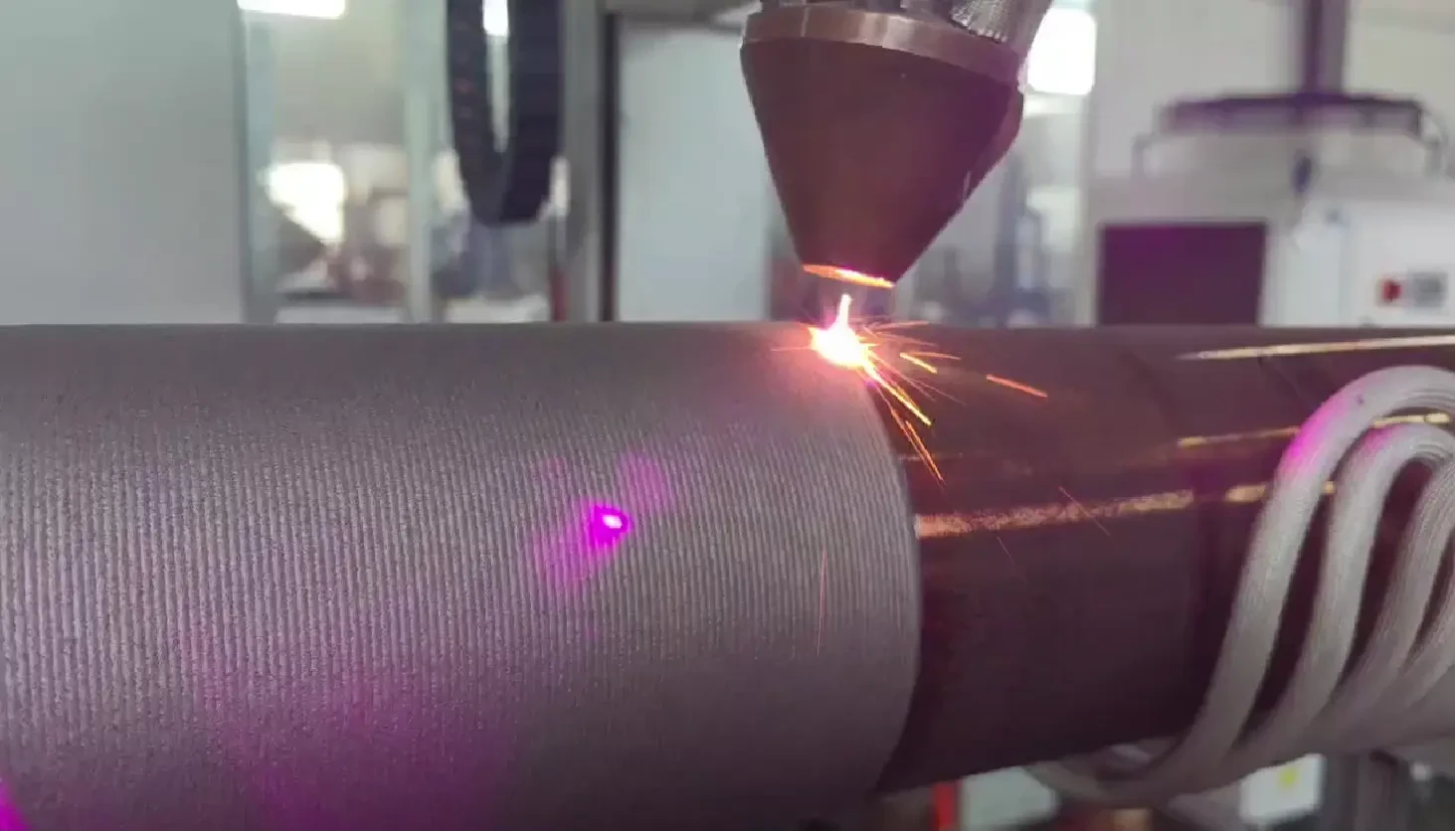
Laser Cladding
Process introduction
Laser cladding uses a high-energy laser beam to melt alloy powder and deposit it onto the substrate surface, creating a dense, uniform clad layer with low porosity. This process precisely controls heat input, delivering minimal thermal energy between the base material and the hardfacing layer to effectively manage distortion and dilution, typically keeping dilution rates below 10%. The low dilution rate minimizes loss of alloying elements and prevents hardening of the substrate, while confining the heat-affected zone to the smallest possible area. This results in an optimal grain structure that enhances the wear and corrosion resistance of the deposited layer.
Enquire about this processUse Cases
- Long, slender rollers
- Precision shafts
- Hydraulic piston rods
- Mold repair
- Sheet metal pipes and custom-shaped components
Technical Advantages
- 01Low dilution rate (<10%)
- 02Low heat input, small deformation
- 03High machining accuracy
- 04Surface roughness Ra0.8-1.6
- 05Small heat-affected zone
- 06Fine-grained microstructure
- 07Pore-free metallurgical bond layer
Technical note
Technical information is provided as a general guide. Confirm base material, joint design, welding procedure, shielding gas and the applicable technical data sheet before use.