Wear Solutions

Wear plates, pipes, drawing-based components, surface engineering and repair, specified against the wear mechanism rather than the catalogue page.

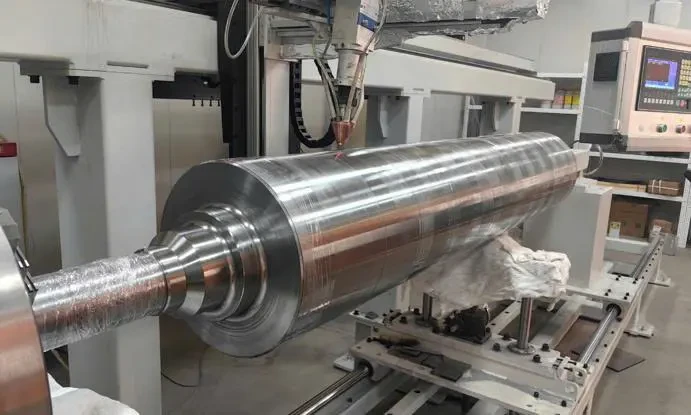
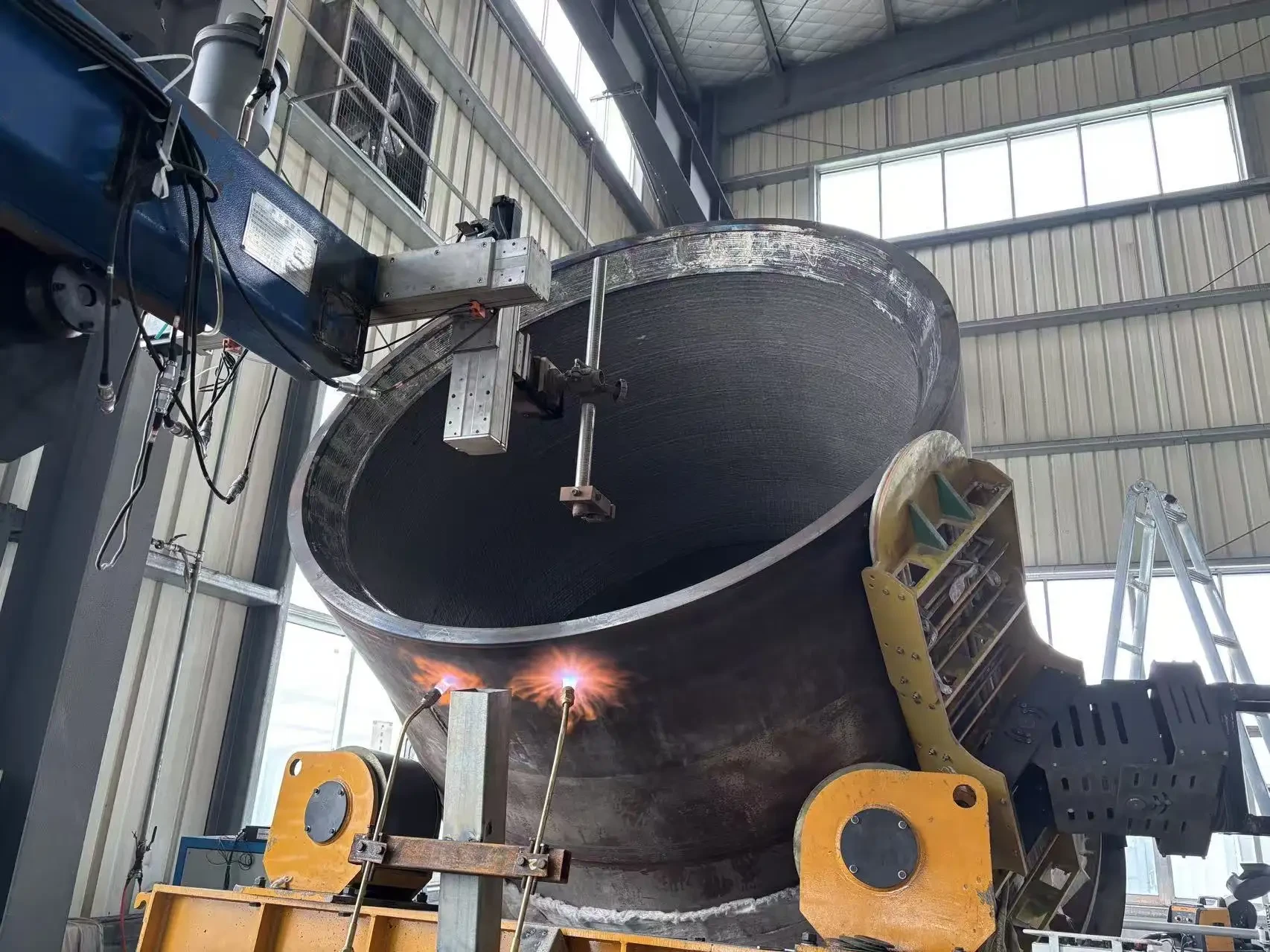
Large wear-resistant component set up for hardfacing inside the workshop, with the cladding equipment and component bore visible
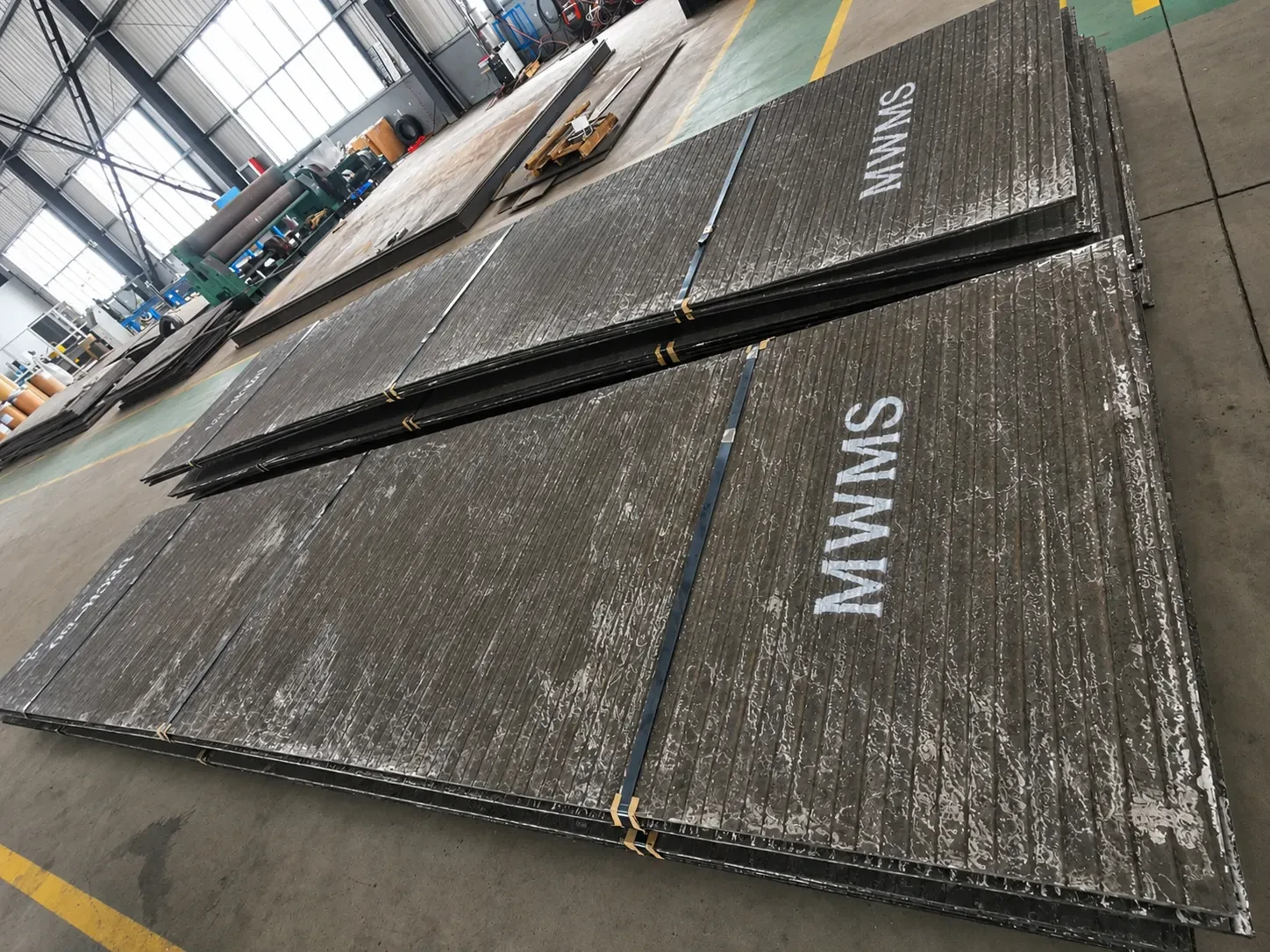
Wear Plates & Liners industrial application
01Wear solution

Wear Plates & Liners

Replaceable protection for chutes, hoppers, bins and abrasive transfer surfaces.

Overlay alloys applied to a steel backing, supplied as flat plates, cut-to-shape liners or formed components. The backing gives the plate its structure and fixing points; the overlay carries the wear resistance. Liners are made replaceable so a worn surface can be renewed without rebuilding the parent structure.

View this solution
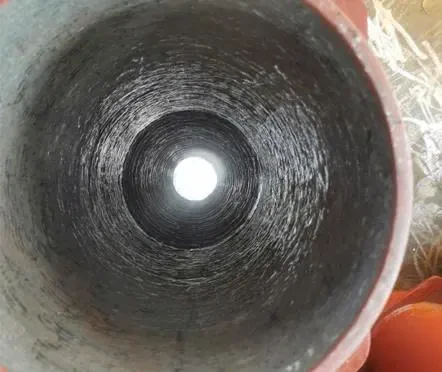

Wear Pipes & Fittings industrial application
02Wear solution

Wear Pipes & Fittings

Internal wear protection for abrasive conveying and material transfer.

Pipes, formed sections and transitions with internal wear protection, for lines carrying abrasive material under gravity or pressure. Bore requirements, end connections and joining methods are agreed against the actual installation rather than assumed from a standard catalogue item.

View this solution
Engineered Wear Components industrial application
03Wear solution

Engineered Wear Components

Drawing-based wear parts matched to the component and operating conditions.

Wear parts manufactured to drawing where a catalogue item will not fit the machine or the duty. Geometry, fixing points and material system are agreed from the drawing and the operating conditions, then coordinated through specialist manufacturing partners.

View this solution
Surface Engineering industrial application
04Wear solution

Surface Engineering

Cladding and coating options for new protection and surface restoration.

Five processes are used to apply a wear-resistant surface to a new or worn component: open-arc hardfacing, submerged-arc surfacing, plasma transferred arc, laser cladding and HVOF thermal spray. Process choice follows the wear mechanism, the component geometry and what the finished part has to do.

View this solution
Repair & Remanufacturing industrial application
05Wear solution

Repair & Remanufacturing

Assessment, rebuilding and dimensional restoration for worn components.

Worn components are assessed, rebuilt and returned to dimension, then given renewed surface protection. Where a part is beyond economic repair, that is stated before work begins rather than discovered afterwards.

View this solution

Five processes, one purpose.

Technical guide
01Open-Arc Hardfacing
A self-shielded wire process used for overlay protection and rebuilding of worn steel components. Applied where the part has lost section and needs both build-up and a wear-resistant surface.
02Submerged-Arc Surfacing
An arc process run under a granular flux, used for overlaying plate and selected component surfaces where a continuous overlay is required.
03Plasma Transferred Arc (PTA)
A transferred-arc process that feeds alloy or carbide powder into the weld pool to build an overlay on the component surface.
04Laser Cladding
A laser-based deposition process used for localised surface engineering and restoration, applying material to a defined area of the component.
05HVOF Thermal Spray
A high-velocity oxy-fuel spray process that deposits a coating onto the component surface, used where a sprayed coating suits the wear environment.

MWMS Series Flux-Cored Wires

  • MWMS-55

    High-Medium Chromium Wear-Resistant

    High-chromium wear-resistant material with moderate impact resistance. Steel base offers excellent weldability. Wear layer consists of composite chromium carbide (primary M7C3). Ideal for chutes, hoppers, feeders, and industrial fan blades.

    Hardness:
    HRC ≥ 56
    Ingredients:
    C: 4.5, Mn: 0.6, Si: 0.8, Cr: 22.0, B: 0.18
    Temperature Resistance:
    350°C
    Carbide:
    ≥25%
  • MWMS-60

    High-chromium wear-resistant

    High-chromium wear-resistant material with moderate impact resistance; primary carbide volume fraction ≥25%. Suitable for chutes, hoppers, feeders, industrial fans, cyclones, and cement equipment.

    Hardness:
    HRC 58–62
    Ingredients:
    C: 5.0, Mn: 0.6, Si: 0.8, Cr: 28.0, B: 0.18
    Temperature Resistance:
    350°C
    Carbide:
    ≥25%
  • MWMS DCF-60

    Crack-free, high-wear resistant

    Crack-free, wear-resistant material engineered for bulk material handling systems. Delivers superior resistance to sliding and impact wear. Its crack-free surface reduces friction and enhances material flow.

    Hardness:
    HRC 58–63
    Ingredients:
    C: 2.0–5.0, Cr: 18–35, V, Mo: < 1.5
    Temperature Resistance:
    350°C
    Carbide:
    ≥25%
  • MWMS DCF-80

    Crack-resistant high impact

    Enhances impact resistance on top of MWMS DCF-60 by adding microalloying elements such as Nb, Ti, and V to refine the grain structure. Ideal for harsh operating conditions involving severe wear and high impact.

    Hardness:
    HRC 58–63
    Ingredients:
    C: 2.0–5.0, Cr: 18–28, Nb, Ti, V: 2–4
    Temperature Resistance:
    350°C
    Carbide:
    ≥25%
  • MWMS-65

    Ultra-durable

    Ultra-wear-resistant material with high chromium content and moderate impact resistance; primary carbide volume fraction ≥30%. Suitable for grate coolers, chutes, hoppers, feeders, mobile equipment, stackers, mining machinery, and more.

    Hardness:
    HRC 60–64
    Ingredients:
    C: 5.0, Mn: 0.6, Si: 0.8, Cr: 32.0, B: 0.18
    Temperature Resistance:
    350°C
    Carbide:
    ≥30%
  • MWMS-80

    High wear and impact resistance

    Chromium carbide hardfacing layer with a primary M7C3 hard phase content exceeding 40%. The vertical growth direction during welding delivers superior wear resistance. Designed for severe abrasive and moderate impact applications.

    Hardness:
    HRC 60–65
    Ingredients:
    C ≥ 4.0, Cr ≥ 25.0, Nb ≥ 4.5
    Temperature Resistance:
    550°C
    Carbide:
    ≥40%
  • MWMS-H

    High-temperature resistant and ultra-durable

    Iron-based high-carbon chromium-niobium-copper alloy offering superior wear resistance and high-temperature performance. Suitable for industrial fans (high-temperature components), blast furnace cover surfaces, sintered ore crushers, hot dust transfer pipes, and blast furnace charging chutes.

    Hardness:
    HRC 58–62
    Ingredients:
    C: 5.5, Cr: 21.0, Mo: 4.0, V: 1.0, W: 1.5, Nb: 4.0
    Temperature Resistance:
    850°C
  • MWMS-TC06000

    Tungsten carbide, high wear resistance

    Tungsten carbide high-wear-resistance overlay material. The wear-resistant layer offers excellent abrasion resistance and good impact resistance. Ideal for extreme wear conditions in wear plates, pipes, fans, chutes, ore cars, and iron ore chutes.

    Hardness:
    HRC 59–63
    Ingredients:
    C: 4.5, Cr: 28.0, W: 3.0
    Temperature Resistance:
    350°C

Powders for Plasma and Laser Cladding

  • MWMS-WC40P

    40% Tungsten Carbide

    Plasma cladding material with 40% tungsten carbide content, where WC particles are uniformly dispersed in a nickel matrix. Sphericity ≥90%, dryness ≥99.9%. Suitable for chutes, pipes, rolls, valves, and similar applications.

    Ingredients:
    W: 38–42%, C: 2.5–2.9%, Ni: 50–53%, Cr: 0.5–1.0%, Co: 4.0–4.9%
    Density:
    6.0–8.0 g/cm³
  • MWMS-WC70P

    70% Tungsten Carbide

    Plasma coating material with 70% tungsten carbide content. Microhardness: Tungsten carbide 2000–2600 HV0.2, Nickel matrix 620–700 HV0.2. Suitable for chutes, industrial fans, mixing machinery, mining/cement equipment, agricultural tools, and bucket teeth.

    Hardness:
    ≥58 HRC
    Ingredients:
    WC: 70% (vol~60%), NiBSi: 30%
  • MWMS-3401

    Ultra-wear-resistant molybdenum-vanadium alloy

    Ultra-wear-resistant molybdenum-vanadium alloy with a wear loss of only 0.022g (compared to 40%WC/Ni's 0.064g), offering superior lifespan and cost-effectiveness versus nickel-based tungsten carbide and iron-chromium alloys. Ideal for vibrating screens, motor grader blades, chutes/liners, wear-resistant tools/blades, mill liners, slurry pipelines, and bucket teeth.

    Hardness:
    HRC 63–68
    Ingredients:
    Hard borides/carbides ≥ 30%

Material selection

Performance Comparison

Performance comparison of MWMS wear-resistant materials across durability, impact resistance, heat resistance and hardness, each rated from 1 to 5.
MaterialDurabilityImpact-resistantHeat ResistantHardness
MWMS-55Durability: 4 out of 5Impact-resistant: 2 out of 5Heat Resistant: 3 out of 5Hardness: 4 out of 5
MWMS-60Durability: 5 out of 5Impact-resistant: 2 out of 5Heat Resistant: 3 out of 5Hardness: 4 out of 5
MWMS DCF-60Durability: 5 out of 5Impact-resistant: 3 out of 5Heat Resistant: 4 out of 5Hardness: 4 out of 5
MWMS-65Durability: 5 out of 5Impact-resistant: 2 out of 5Heat Resistant: 3 out of 5Hardness: 4 out of 5
MWMS-80Durability: 5 out of 5Impact-resistant: 4 out of 5Heat Resistant: 3 out of 5Hardness: 4 out of 5
MWMS-HDurability: 5 out of 5Impact-resistant: 2 out of 5Heat Resistant: 4 out of 5Hardness: 5 out of 5
MWMS-TC06000Durability: 3 out of 5Impact-resistant: 3 out of 5Heat Resistant: 3 out of 5Hardness: 4 out of 5
MWMS-WC70PDurability: 4 out of 5Impact-resistant: 5 out of 5Heat Resistant: 4 out of 5Hardness: 4 out of 5
MWMS-3401Durability: 5 out of 5Impact-resistant: 5 out of 5Heat Resistant: 4 out of 5Hardness: 4 out of 5

Send us the component, the drawing or the wear problem.

Photographs of the worn part, the drawing number and the duty are usually enough for us to recommend a material system and a process route.